-

Email address biopharls@gmail.com
-

Registered Office HB NO.234,Pabhat,Zirakpur SAS Nagar(Mohali)
Email address biopharls@gmail.com
Registered Office HB NO.234,Pabhat,Zirakpur SAS Nagar(Mohali)
Dapagliflozin, Glimepiride and Metformin Hydrochloride (Extended Release) Tablets - Manufacturers & Suppliers - Third Party Contract Manufacturing
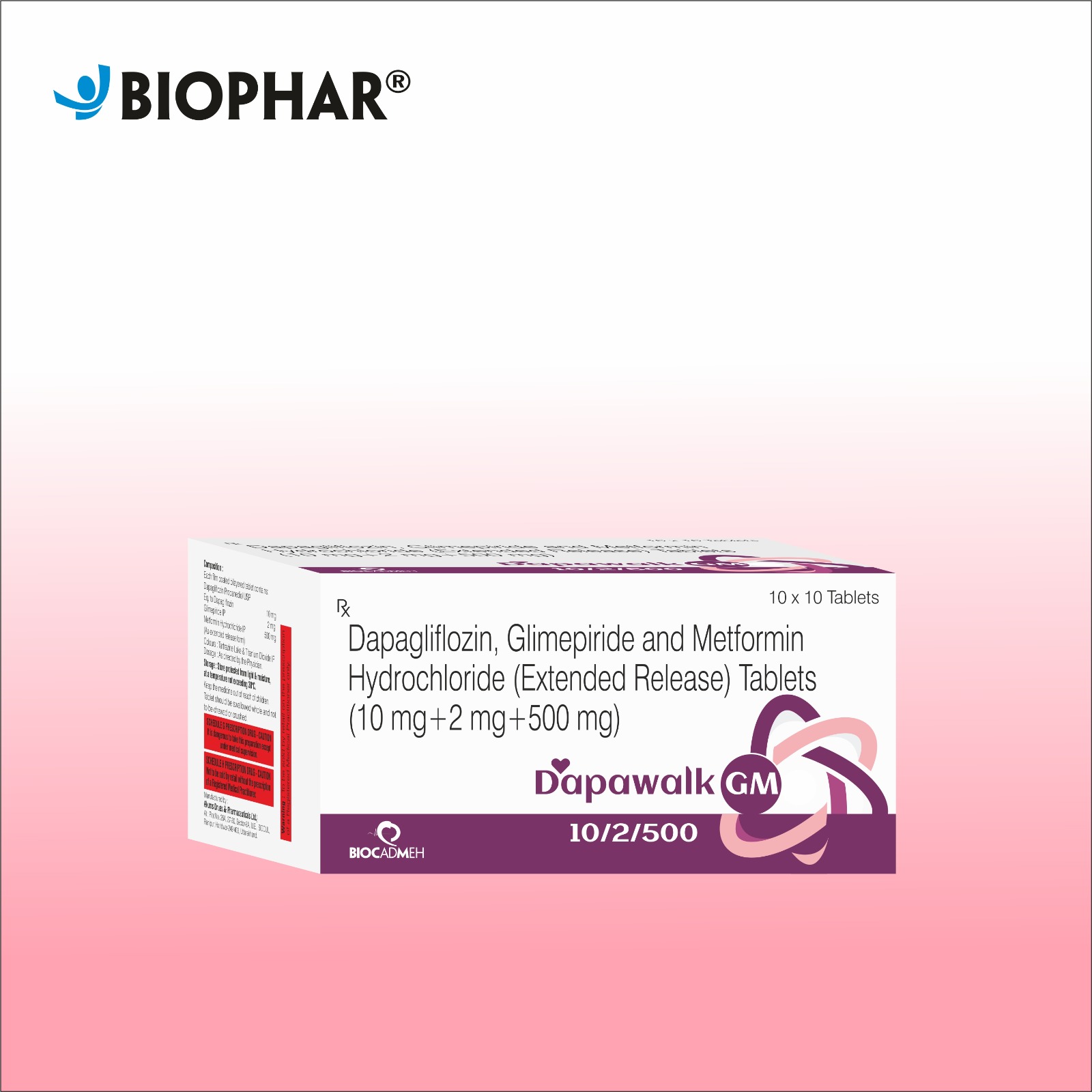
Product Name : Dapawalk GM
Composition : Dapagliflozin, Glimepiride and Metformin Hydrochloride (Extended Release) Tablets
Packing : 0
Price : Rs.
Quick Enquiry(Please do not enquire for jobs query)
Dapagliflozin, Glimepiride, and Metformin Hydrochloride Tablets— It represents a powerful, triple-combination oral medication designed to treat and manage type 2 diabetes mellitus. The primary use of this antibiotic medicine is to manage blood sugar levels and improve overall diabetes management. The formulation is composed of dapagliflozin, glimepiride, and metformin hydrochloride tablets. Each component plays a vital role in controlling blood glucose levels through complementary mechanisms.
Dapagliflozin is a sodium-glucose co-transporter 2 inhibitor. This works by stopping a protein in the kidneys from absorbing glucose back into the blood. Hence, it promotes glucose excretion through urine. Glimepiride, a sulfonylurea, stimulates insulin release from pancreatic beta cells. Whereas metformin, a biguanide, reduces glucose production in the liver and improves insulin sensitivity. All together, they produce a synergetic action in controlling and managing the blood sugar level.
Biophar Lifescience is a well-established name in the pharmaceutical realm, known for producing a wide range of therapeutic drugs, along with Dapagliflozin, Glimepiride, and Metformin Hydrochloride Tablets, under the brand name Dapawalk GM. Partner with Biophar Lifescience for PCD Pharma Franchise and third-party manufacturing business opportunities.
This potent combination works by reducing the blood glucose level. Along with this, it also reduces the risk of diabetes-related complications such as neuropathy, nephropathy, and retinopathy. The working mechanism of this triple-combination formulation has been discussed as follows:
Dapagliflozin: It belongs to the sodium-glucose co-transporter 2 inhibitors, also known as the gliflozin class of medication. It works by blocking the sodium-glucose co-transporter 2 in the kidneys, leading to increased glucose excretion through urine.
Glimepiride: is a sulfonylurea. It stimulates the pancreatic beta cells to release more insulin. A hormone that aids in the uptake of sugar from the blood by body cells. Thereby lowers blood sugar levels throughout the day.
Metformin Hydrochloride: Metformin Hydrochloride is a biguanide. This decreases glucose production in the liver, reduces glucose absorption in the intestines, and improves insulin sensitivity in muscle tissues.
The medical benefits of dapagliflozin, glimepiride, and metformin hydrochloride tablets have been mentioned as follows:
Enhanced Glycemic Control: The combination of three distinct mechanisms provides superior blood sugar reduction compared to single or dual therapy.
Weight Management Support: Dapagliflozin may contribute to modest weight loss through glucose excretion in urine, which can be beneficial for overweight diabetic patients.
Cardiovascular Benefits: SGLT2 inhibitors like dapagliflozin reduce the risk of cardiovascular and renal complications associated with diabetes.
This combination medication may result in possible side effects, which go away as the body adjusts to the dosage. Consult your doctor if they persist or if you’re worried about them.
A list of them has been mentioned as follows:
Disclose your previous or recent health issues to your healthcare provider. A list of precautions and safety measures has been mentioned as follows:
Follow the instructions:
Q1: What should I do if I miss a dose?
Take it as soon as you remember. If it is almost time for your next dose, skip the missed dose. Do not take a double dose to make up for a forgotten one.
Q2: Can I take this medicine while pregnant or breastfeeding?
No, it is not recommended. Consult your doctor for alternative management of diabetes during pregnancy and lactation.
Q3: Is there a risk of low blood sugar with this combination?
Yes, primarily due to the glimepiride component. The risk is higher if you skip meals, exercise more than usual, or drink alcohol.
Q4: How should I take this tablet?
It should be taken once or twice daily as prescribed, preferably with meals, to reduce the gastrointestinal side effects associated with metformin.
Q5. Can I take this medicine with other antidiabetic drugs?
Use it only under a doctor’s advice, as combining multiple drugs may increase the risk of hypoglycemia.
Q6. Is it safe for patients with kidney problems?
Caution is advised; dosage adjustment or alternative treatment may be required.
Q7: How long does it take for this medication to work?
You may begin to see improvements in blood sugar levels within a few days to a week, but it typically takes 2-4 weeks to experience the full effects.